
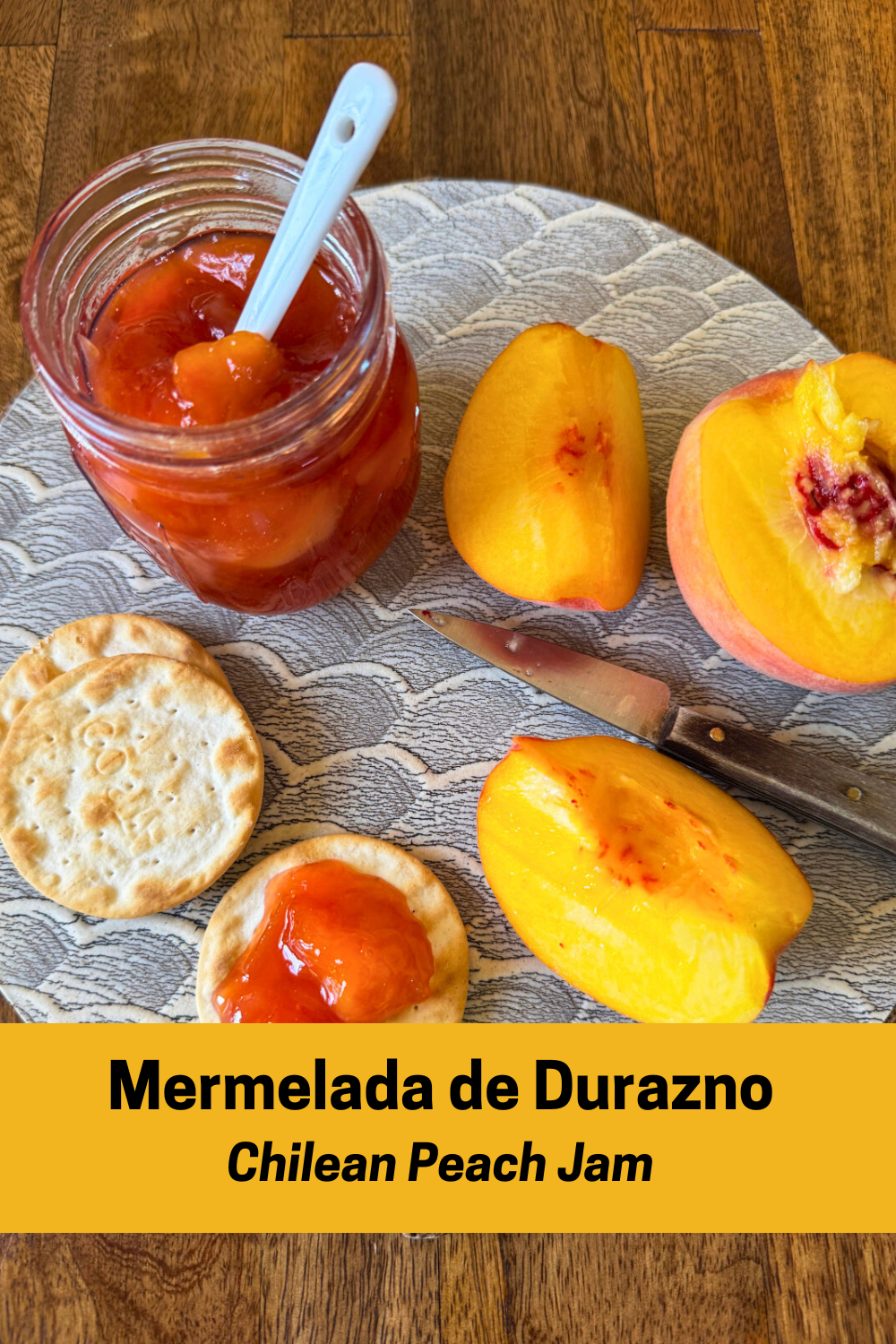
Jams and Jelly have been part of Chilean cuisine since the introduction of sugar—the perfect way to preserve the bounty of fruits. One of my favorites is this Chilean peach Jam.
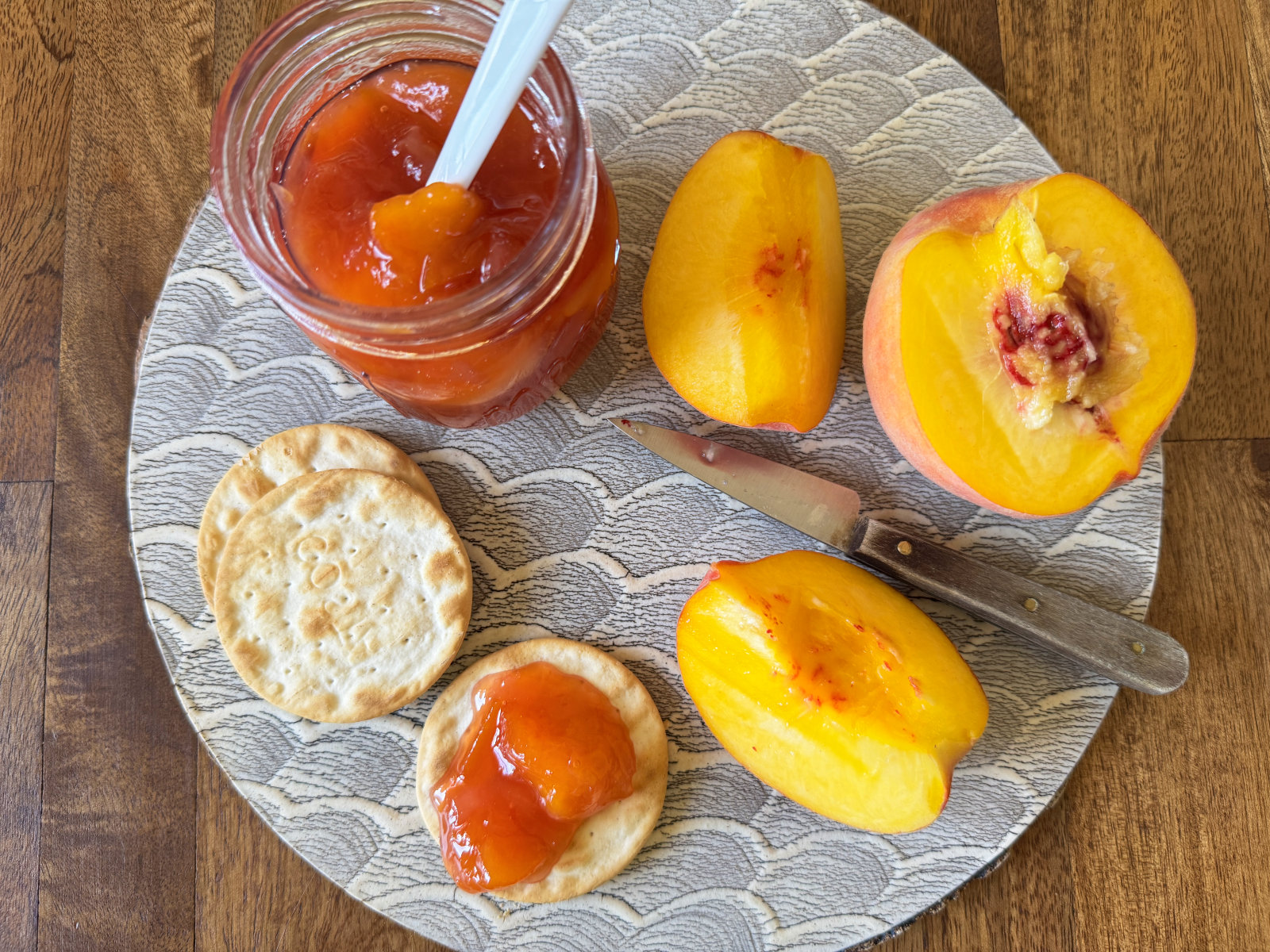
Why are jams in the USA so different from traditional jams in Chile?
The Chilean method of making homemade jam, influenced by European traditions, tends to rely on natural pectin from the fruit itself rather than commercial additives.
Additionally, traditional Chilean methods often involve macerating the fruit overnight with sugar to enhance its natural juices before cooking, a technique borrowed from European influences but adapted to local ingredients and preferences.
Any peach would work for jam, but the best are the yellow freestone peaches, varieties like Elberta or Angelus, or peaches labeled suitable for canning.
More recipes for traditional Chilean Jams.
Print
Chilean Peach Jam
- Prep Time: 45 minutes
- Cook Time: 40 minutes
- Total Time: 1 hour 25 minutes
- Yield: 2 cups
- Category: Jam
- Method: stove
- Cuisine: Chilean
Description
A delightful way to preserve the summer.
Ingredients
- Ripe yellow freestone peaches
- Granulated sugar
- pinch of salt
Instructions
- Wash the jars with boiling water or put them in the dishwasher.
- Wash and dry the peaches. Chop the peaches into small pieces, discarding the pits.
- Weigh the chopped peaches. Add half their weight in granulated sugar, stir, and let it rest refrigerated overnight, stirring occasionally.
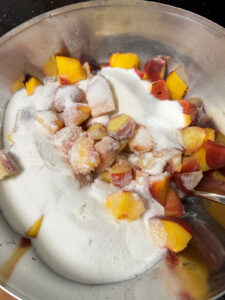
- The next day, cook the peaches, sugar, all the juices, and a pinch of salt in a pot (I use a pasta pot) over high heat until they boil.
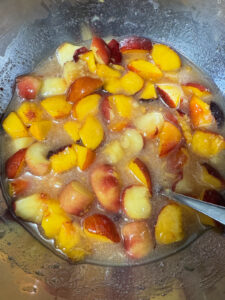
- Reduce the heat to a gentle boil. It will foam quite a bit; stir occasionally and continue cooking.
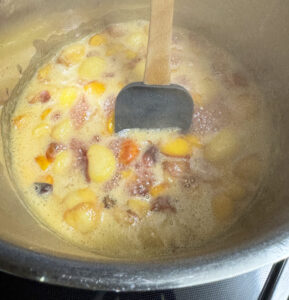
- Once it stops foaming, cook for 10-20 minutes until it reaches the desired consistency. Do not cover the pan.
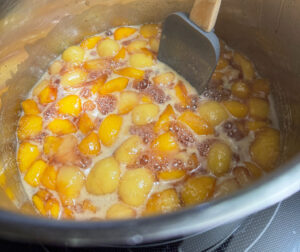
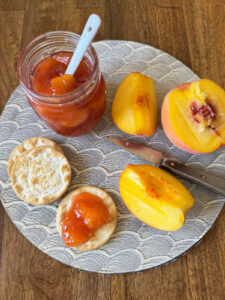
- To test, remove a teaspoon to a plate and refrigerate it for a few minutes. Test it cold.
Notes
This jam can't be stored outside the refrigerator because it has little sugar. If you want to store it in the pantry, increase the sugar content to a minimum of 800 grams per kilo of fruit.
Hello! How many pounds of peaches for the recipe? Thank you.
Usually, 2 pounds is a good start, but you need a scale because the amount of sugar added is proportional to the amount of peaches without the pits.